Look good in your own style
Dress to look attractive and feel confident. Fashion, personality and a flattering fit are welcome.
 Official Dress Guide
WE DON’T HAVE A DRESS CODE.
At Turbo, we don’t have a dress code.
Just four things to consider before leaving home.
Many of our colleagues are young and early in their careers.
Dress to look good, feel confident and express your style.
Bring a little care, and choose what suits the working day.
Head Office · Dress for the day ahead
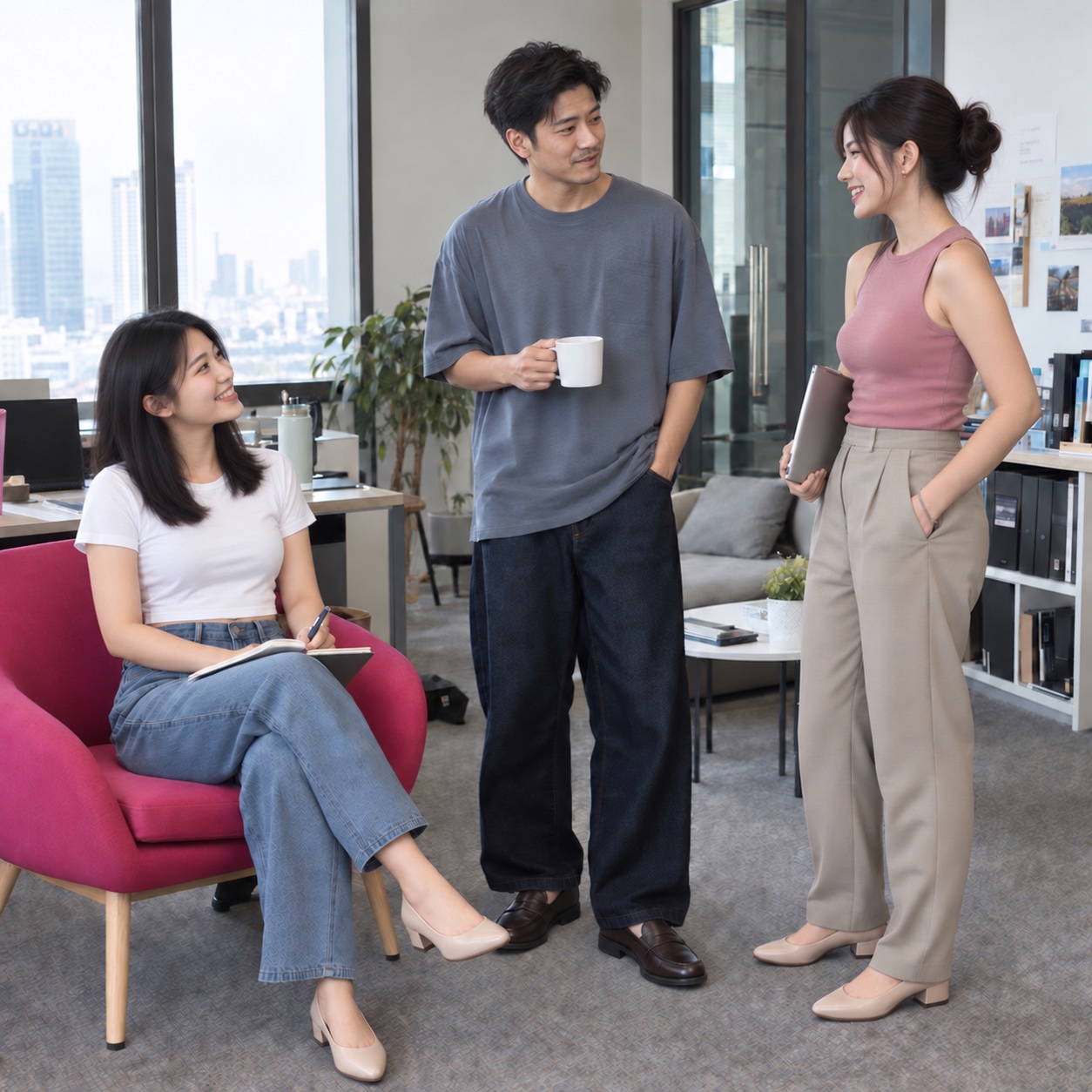 Image 01
OUR DRESS PRINCIPLE
We do not ask everyone to dress alike. We do expect everyone to make an effort to look good at work.
Dress to look attractive and feel confident. Fashion, personality and a flattering fit are welcome.
Clothes, shoes, hair and accessories all count. Choose pieces that go well together and keep them in good condition.
Everyday style can be relaxed. Beachwear, pyjamas, gym sets and club outfits belong in their own setting.
The goal: a better-looking office, every day.
FOUR CHECKS BEFORE WORK
Look at the whole outfit, then sit, bend and reach before you leave home.
Clean clothes, neat hair and cared-for shoes. No obvious stains, stretched collars or worn-out details.
Avoid noticeable stains or tears. Care for the clothing; normal daytime creasing is fine. Use fragrance in moderation.
Choose a cut and size that flatter you. Buttons should not strain, waistbands should not squeeze, and clothes should stay in place.
Check stretched collars, heavy pilling, severe fading and shoes worn out of shape. Fitted clothes can show your silhouette while buttons lie flat and movement stays comfortable.
Match the occasion. Business visits and meetings call for a sharper outfit than an ordinary desk day.
This includes standalone bandeaus, micro-miniskirts and highly revealing or see-through night-out looks. Only a long opaque bandeau with an outer layer worn all day is an exception. See the visual examples.
Sit, bend and reach comfortably. Underwear should stay covered, with no colours or patterns showing through the fabric.
Choose fabric and cuts that maintain coverage in motion. A tiny crop is fine; avoid large torso openings or low back openings near the hips. Brief glimpses of a bra strap or waistband are not the concern.
A good outfit does not have to be expensive. Fit, condition and the complete look matter.
READ THE WHOLE LOOK
Image numbers follow the slide order and match in both views.
A well-chosen outfit that looks good.
Allowed, but choose a better option when you can.
Choose a different garment or pair of shoes.
01 / BUSINESS VISITS & MEETINGS
Regulators, official events, business visits or meetings: choose the level of formality the occasion needs.
For appointments we host or attend: match the formality to the people, purpose and setting.
When known, tell the team at least one working day ahead, including the expected formality.
Notify colleagues promptly. Add a blazer or change into a suitable spare pair of shoes.
Full suit for regulators and official events. Otherwise: suit without tie → blazer → neat shirt, according to the meeting brief.
For meetings with regulators and official business events. Men wear a tie.
Wear a full matching suit for meetings with regulators and official business events. Men: add a tie. Finish with polished closed shoes.
Wear a full matching suit for meetings with regulators and official business events. Men: add a tie. Finish with polished closed shoes.
A matching suit, with a little less ceremony.
Keep the matching suit and neat shirt. An open collar takes the formality down one step.
A matching suit, simple blouse and loafers retain a business look without a neck scarf.
A polished outer layer, a neat top and leather shoes.
A blazer that fits at the shoulders, a plain top, tailored trousers and leather loafers look polished and approachable.
A well-fitting blazer, opaque blouse, tailored trousers and loafers make a meeting-ready outfit.
MAKE IT YOUR OWN
We want an office that looks good through everyone's care. Choose a style you enjoy and make it ready for the work ahead.
There is no uniform or colour of the day. Ordinary office days do not require suits, ties or a tucked shirt at all times. Choose a cut that fits you, looks cared for and allows movement.
For business visits or meetings, use the more polished looks above. Hair and accessory details are collected here →
02 / EVERYDAY STYLE
Shirts, polos, structured tees and long jeans can work when the complete outfit looks considered.
An everyday look. Keep the jeans dark and neat, and finish with polished closed shoes.
A coloured blazer, plain top, dark unfrayed jeans and polished loafers work well on an ordinary office day.
A light-blue blazer and straight dark jeans make an everyday outfit look intentional. Keep the top and closed shoes neat.
Tailored long trousers and leather shoes complete the look.
A crisp white shirt, tidy tuck, simple belt and leather loafers keep the whole look sharp.
An opaque, well-fitting white shirt with tailored trousers and loafers looks crisp and considered.
Muted green or soft blue gives the same level more variety.
Muted colour adds variety. Choose fabric that holds its shape and finish with brown leather shoes.
A soft blue shirt brightens the outfit. Keep the waistband and trouser hems neat.
Let one restrained pattern work with plain trousers and refined shoes.
A small check works well with plain trousers and cared-for leather shoes.
A restrained pattern and coordinated colours add variety while staying work-ready.
Between a button-down and a T-shirt: a shaped collar, refined fabric and tailored trousers.
A shaped collar, quality fabric and no prominent sports logo work well with tailored trousers and loafers.
A neat polo sits between a shirt and a T-shirt in formality. Choose an opaque fabric and a comfortable fit.
A fresh everyday look with full-length tailored trousers.
Clean, minimal white sneakers give the shirt-and-trousers look a fresh feel for an ordinary office day.
An opaque shirt, neat full-length trousers and cared-for white sneakers make a considered casual outfit.
A good shirt, neat long jeans and clean sneakers. A Silicon Valley-inspired look for ordinary office days.
A Silicon Valley-inspired everyday look: a neat untucked shirt, straight dark jeans and clean white sneakers. Keep the collar, cuffs and hems tidy.
A well-cut striped shirt and neat straight jeans make a relaxed office outfit. Clean white sneakers keep the whole look fresh.
An overshirt or light cardigan adds shape. Keep the tee, jeans and sneakers in good condition.
A lightweight overshirt adds shape to a plain T-shirt and jeans. Keep the layers crisp and the sneakers clean.
A light cardigan over a simple opaque top, dark jeans and clean sneakers works for a normal office day. Choose knitwear that keeps its shape.
Structured tees, long trousers and clean sneakers for an ordinary office day.
The collar and hem hold their shape. Long trousers and clean sneakers make this an ordinary office-day look.
An opaque, well-fitting tee with a tidy tuck and long tailored trousers keeps the outfit neat.
Same shirt and shoes. Different tears, fraying and hem length.
Intact dark denim with a tidy hem clear of the floor works with a shirt and leather shoes.
Large holes, heavy fraying and fabric pooling over shoes leave the outfit unprepared for the office.
A stretched tee, frayed trousers and dirty shoes look neglected. Replace or repair them.
A sagging collar, faded frayed trousers and dirty, scuffed shoes make the whole outfit look neglected. Replace or repair them.
Allowed, not encouraged. Keep them clean, pair with proper long trousers and change for business meetings.
Allowed, not encouraged. A clean Hawaiian shirt with long trousers is still very casual. A neat shirt or polo looks better for the office.
Allowed, not encouraged. Tailored trousers and neat shoes help, but a simpler blouse makes a stronger work outfit.
03 / CUT & COVERAGE
Camisoles, crops and dresses: choose a good cut and check that the coverage holds when you move.
A refined top, light tailored trousers and polished leather shoes.
A refined camisole with high-waisted tailored trousers and leather loafers can look feminine, polished and ready for work.
Enjoy your style. Look at the fit and the whole outfit together.
Check under office lights and near a window.
Bra or brief colours and patterns are clearly visible through a thin blouse, pale trousers or skirt. Wet fabric can become see-through too.
Use enough coverage, with plain skin-blending underwear if helpful, and check again in bright light.
A skin-blending colour alone cannot fix see-through fabric. Check necklines, armholes and button gaps in motion.
Keep the top and waistband close, with coverage while sitting or reaching.
Keep the top and waistband close together. Coverage should still hold when you sit or reach.
A very short top exposes a wide area of the torso. Choose a longer top or add a layer that provides coverage.
Consider the neckline, armholes, length and pairing, as well as the straps.
A well-fitting top, proper long trousers, opaque fabric and reliable coverage can work for an office day.
A very short, revealing top with a clear partywear feel belongs outside office hours.
A long opaque top must reach the waistband, with an outer layer worn over it.
The exception: an opaque bandeau reaching the waistband, with a blazer or suitable cover kept on throughout the day.
A standalone bandeau is unsuitable. The exception requires both a longer top and an outer layer.
The blazer is not enough. A broad bare waist is too much for the office.
An outer layer does not make a short bandeau suitable. A broad bare waist—around six inches—is too much for the office.
Choose opaque, cared-for fabric, a good fit and comfortable coverage in motion.
An above-knee, fitted shape is welcome when it fits comfortably and allows normal movement.
A neat shape, cared-for fabric and comfortable, well-chosen shoes look good together.
Check standing and moving. A micro-miniskirt is not an office look.
An above-knee hem is fine when the cut and fabric look polished and coverage holds while sitting, bending and walking.
A hem very close to the crotch risks exposure while sitting or bending. Choose a longer skirt for work.
Consider the cut, coverage and complete outfit, as well as the hem.
A well-cut, opaque dress that fits and maintains coverage while sitting or bending can work.
A very short dress with a clear stagewear or clubwear feel is better suited to time outside the office.
04 / LEGGINGS
Compare three good-looking outfits with three gym looks to leave out of the office.
Black or coloured leggings: choose a crisp shirt, a tailored layer or a long blouse. Keep the fabric opaque and the shoes neat.
Plain leggings can look good. A crisp long shirt, neat sleeves and leather loafers turn this into a deliberate office outfit.
Leggings with subtle design details work too. Choose opaque fabric and pair them with a good top, a tailored layer and refined closed shoes.
Burgundy leggings work with an ivory long blouse and neat leather loafers. Choose opaque fabric, a smooth fit and a top that covers the waistband and hips.
Tight crop tops, bare-waist Pilates sets and shapeless gym outfits are not office looks. Change the top and finish the outfit.
The leggings are not the problem. A sagging T-shirt and running shoes leave the outfit looking ready for a workout. Change the top and finish the look.
A tight, short crop top with a wide strip of bare waist makes this a gym or off-duty outfit. Wear a proper longer top or a tailored outer layer for the office.
A sports crop top and matching leggings are workout clothes. Save the full set for Pilates or the gym; style the leggings with a proper shirt or blouse for work.
05 / SHORTS
Men should wear long trousers. Women can wear tailored shorts only as a polished outfit with proper coverage.
Even tailored shorts with a smart shirt or loafers are out. Choose proper long trousers.
A crisp white shirt does not make men’s shorts suitable. Keep the shirt and loafers; change to proper long trousers.
An Oxford shirt and neat Bermudas still include shorts. Keep the shirt and change to proper long trousers.
Even a neatly styled outfit with a collared shirt and leather shoes needs long trousers. Men’s shorts are not for work.
For men, shorts remain a no with a polo, T-shirt, blazer or any shoes.
The polo and loafers can stay. Replace the shorts with long trousers; men’s shorts are unsuitable even when neatly styled.
T-shirt, shorts and sneakers make a weekend outfit. For work, men need proper long trousers and a more considered combination.
Women can wear the polished tailored combinations shown here. Check coverage when sitting and bending.
A matching blazer and tailored shorts, with particularly refined sandals, bring the whole outfit together.
A neat blouse, tailored shorts and loafers define the waist while leaving room to sit comfortably.
A neatly arranged shirt, tailored shorts and loafers make the styling look deliberate.
For women, fitted tee + shorts is allowed but not encouraged. Denim shorts are a no.
A polished blouse, structured high-waisted shorts and refined low-heeled sandals work together.
Allowed, not encouraged. A close-fitting tee with shorts still looks very casual. A proper blouse or tailored layer gives a better result.
Even a neatly finished hem does not make denim shorts an office outfit. Choose structured tailored fabric.
A revealing party top with extremely brief shorts is too much for the office.
A top that provides coverage, an outer shirt, tailored shorts and loafers can create a polished outfit.
A revealing party top, frayed ultra-short denim and basic slides are too much for an office day. Keep this for another setting.
06 / FIT
Fitted is fine. The fabric should lie smoothly, buttons should not strain, and you should be able to sit and bend.
Choose a fit that suits your body. Both examples sit smoothly without squeezing the waist or pulling up.
The polo follows the chest and waist without strain, and the hem stays in place.
This fitted size works: the fabric follows the torso without squeezing the waist, pulling across the stomach or riding up.
Let the fabric fall naturally and the button line sit flat.
The shirt holds its intended shape, with smooth buttons and enough room through the waist.
The button line pulls apart and the waist is visibly tight. Choose more room through the chest and middle.
A defined waist works when the fabric lies smoothly and you can move. Tight is not automatically better.
A shaped waist is welcome. The fabric should lie smoothly and the seams should not twist.
A close fit is fine when the fabric lies smoothly and the hem stays down. Choose the size for your body today.
Leave enough room at the chest, stomach and hips. If the fabric bunches or the waistband digs in, change the size or cut.
A fuller figure needs enough room at the waist, chest and hips. This cut keeps its shape without squeezing.
The waist digs in and fabric bunches across the stomach. Size up or choose a cut with more room. Tight does not always look good.
07 / SHOES
Start with good-looking shoes, then see the options we do not encourage and the pairs to leave out.
Loafers, refined flats and clean sneakers can work with the right outfit.
Keep leather or synthetic leather clean, with no extensive peeling or cracking.
Flat shoes can look polished. Choose a well-fitting pair that is comfortable to walk in.
Keep the uppers clean and the stitching and soles in good condition.
Check the uppers, stitching, soles and cleanliness.
Clean brown Oxfords, intact soles and matching socks make a smart finish. Keep the leather polished and the heels upright.
Extensive cracking, peeling, scuffed toes and a separating sole call for repair or replacement.
Especially refined women’s open-back sandals are the good-looking exception.
This is a suitable women's sandal example: a refined shape, neat straps and heels, paired with a polished outfit.
A neutral option, depending on the outfit and occasion. Prefer neat long trousers; change to leather shoes for business visits or meetings.
The modest crop and long trousers can work. Cork-footbed sandals remain neutral; closed-toe shoes make this more polished.
Allowed, not encouraged. Keep them clean and neatly decorated; use them for indoor office walking.
Neutral, not a main recommendation. If you like them, keep them clean and any decoration neat. For indoor walking; change before meetings or receiving guests.
Neutral, not a main recommendation. If you like them, keep them clean and any decoration neat. For indoor walking; change before meetings or receiving guests.
Change before meetings or receiving guests.
Allowed, not encouraged. Clean, styled indoor shoes are different from disposable hotel slippers.
Neutral, not a main recommendation. If you like them, keep them clean and any decoration neat. For indoor walking; change before meetings or receiving guests.
Neutral, not a main recommendation. If you like them, keep them clean and any decoration neat. For indoor walking; change before meetings or receiving guests.
For indoor office walking. Change before meetings or receiving guests.
Torn sneakers, worn flip-flops and disposable hotel slippers are not work shoes.
Clean, repair or replace the shoes according to their condition.
Flattened soles, worn straps and ground-in dirt make this pair look neglected. Replace it with cared-for shoes.
Thin hotel slippers are room footwear. They are not the same as clean, styled indoor office shoes. Leave them for the hotel room.
Leather shoes, loafers or sneakers: put your heel inside the shoe. Never fold the back underfoot.
Do not step on the heel counter, even with socks. Wear the shoe with your heel fully inside; repair or replace a damaged pair.
Even a good loafer looks careless when its back is crushed under your heel. Put the whole shoe on properly.
Clean sneakers still need to be worn properly. Do not fold their backs under your heels.
08 / FINISHING DETAILS
Belts, hair and grooming matter to the whole look as much as the clothes do.
Consider the design, condition and length. It need not be new or expensive.
An understated buckle, intact edges and holes, and an end held neatly in its keeper complete the outfit.
Cracked surfaces, stretched holes, ragged edges and a long loose end can spoil an otherwise neat outfit.
An oversized ornate buckle and heavy studs dominate this simple office look. Choose something more restrained.
Keep it clean, brushed, styled or tied back before work.
Brush, style or loosely tie it back in a way that works for your hair.
Tangled clumps and unarranged hair need attention. Detangle, brush or tie it back before work.
Loose or tied back is fine. Detangle and arrange it.
Wear it loose or tied back. Brush and arrange it so it looks neat.
Extensively tangled and unarranged hair needs detangling and tidying before the office day.
Ear gauges, nose piercings and eyebrow piercings are outside Turbo’s guidance.
Ear stretching and gauges are outside the company's office appearance standard.
Nose jewellery is outside the company's office appearance standard.
Eyebrow jewellery is outside the company's office appearance standard.
Punk-style hair colours and black lipstick are outside the company standard.
Sharply contrasting, multicoloured neon hair is outside the office appearance standard.
Black lipstick is outside the company's office appearance standard.
09 / LEAVE THESE AT HOME
Pyjamas, elephant-print pants and shiny sports track pants are not ordinary office clothes.
Use utility clothing and protective equipment when the job requires them. Change for an ordinary desk-work day.
Utility uniforms and heavy-duty footwear belong where the task needs them. Dress for the work assigned that day.
These comparisons concern ordinary Head Office days. Follow the task’s safety requirements.
Consider the cut, fabric and shoes. Make the whole outfit ready for work.
The print, pockets, loose house-dress shape and basic slides leave this outfit unprepared for the office.
An oversized rumpled top, relaxed printed trousers and fluffy slippers look like homewear. Indoor walking shoes do not make the whole outfit suitable.
The denim shorts, tears, fraying and slides make the combination too casual.
Pyjamas, stretched tees and undershirts do not make an office outfit.
A washed-out oversized tee, soft lounge shorts and house slippers belong at home.
A collar does not turn cotton pyjamas into an office outfit. Change into proper work clothes.
An old undershirt, lounge shorts and basic slides look like homewear. Do not wear this combination to work.
Flowing holiday pants and shiny sports track pants are too casual for the office. Choose trousers with a proper shape and finish.
Thin, flowing elephant-print lounge pants are too informal for Head Office. Choose trousers with a proper shape and finish.
Glossy synthetic fabric, athletic stripes and an elastic waist make these sports track pants. Keep them for exercise or casual time.
10 / BEFORE YOU LEAVE HOME
Sit, bend and reach before leaving home. The outfit should stay neat through all three.
Sit, bend and reach. Your clothes should stay in place and provide coverage.
The hem should still provide coverage. Apply the same check to above-knee dresses.
The neckline and armholes should not open enough to clearly expose underwear.
A tiny sliver of midriff is fine. Avoid exposure that makes you keep pulling the top back down.
A brief glimpse of a waistband or bra strap can happen. The concern is clearly visible underwear or clothing that needs constant adjustment.
If unsure, a cardigan or blazer can provide an extra layer.
RIGHT OUTFIT, RIGHT PLACE
Save these outfits for the settings they were made for.
Choose an outfit that works for the whole office day.
Pyjamas, sleeping T-shirts
and sleep shorts or trousers
Swimwear, short standalone bandeaus with substantial torso exposure, and beach shorts.
Track pants, sports bras and gym tank tops are not work outfits. Leggings can work with a well-styled upper half, as shown.
Micro-miniskirts and stagewear or clubwear that is highly revealing, see-through or does not maintain coverage in motion.
BE READY FOR THE DAY
Choose clothes for the work you actually have to do.
Be prepared when the day's plans change.
Friday keeps the same standards of cleanliness, condition, fit and coverage. Homewear, damaged shoes and men’s shorts remain unsuitable.
Dress as a complete outfit in case you stand up or turn on the camera unexpectedly. Use business-visit guidance for external meetings or company photography.
A spare shirt may help. Wet pale fabric can reveal underwear; change into something dry and adequately covering when practical.
Follow the organiser's brief and the site's protective-equipment requirements. If you also have a business meeting, prepare a suitable change or outer layer.
PRACTICAL EXCEPTIONS
Pregnancy, injury and religious dress are practical exceptions. Contact HR if you need help.
Pregnancy, injury and religious dress have straightforward exceptions.
Wear a maternity cut with room to move and supportive shoes. Comfort during pregnancy takes priority.
A cast, crutches or recovery sandal is fine. Follow the needs of your recovery instead of the usual shoe examples.
A hijab or other religious head covering is welcome with your work clothes. No special permission is needed.
Hijabs, head coverings, turbans, mourning attire and religious dress are welcome. No permission or explanation is needed.
Pregnancy, disability, injury, casts, braces, medical devices, orthopaedic footwear and fabric sensitivities take priority, including footwear exceptions.
Contact HR directly and share only what you are comfortable sharing. We will not request a medical certificate simply to confirm an obvious need.
A CONVERSATION, WITH CARE
These guidelines rely on cooperation.
There are no penalties.
Your manager or HR will explain what needs changing in private. Discuss the outfit, without public comments or group messages.
HR owns the guidance. Managers should check with HR when unsure, and teams should not add separate clothing standards.
Ask HR to review a concern against the four considerations. If it cannot be linked to one of them, it is not an issue under this guide. Personal preference is not the test.
A FEW MORE THINGS
Here are answers
to a few common questions.
For regulators or official business events, wear a full suit. For other appointments, follow the organiser’s brief: suit without tie, blazer or a neat shirt with tailored trousers and leather shoes.
We do not require one uniform or style. This guide makes the office standard clear: clean, cared for, suitable for work and properly covered when moving.
Men should not wear shorts of any kind, even tailored pairs with a shirt and loafers. Women can wear tailored shorts in a polished outfit like the examples. Denim shorts and extremely brief shorts are unsuitable.
60 days from the issue date; new colleagues get 60 days from their start date. The company will not raise individual clothing concerns during this period. HR can answer questions at any time.
No. There is no written record, work-rule warning or effect on performance reviews. If an outfit needs changing, your manager or HR will explain it privately.
Allowed, not encouraged. Keep the shirt clean, wear proper long trousers, and change before business visits or meetings.
No. This applies to leather shoes, loafers and sneakers alike. Put your heel fully inside. Repair or replace damaged heel counters.